
Punjab Introduces New Guidelines For Schools
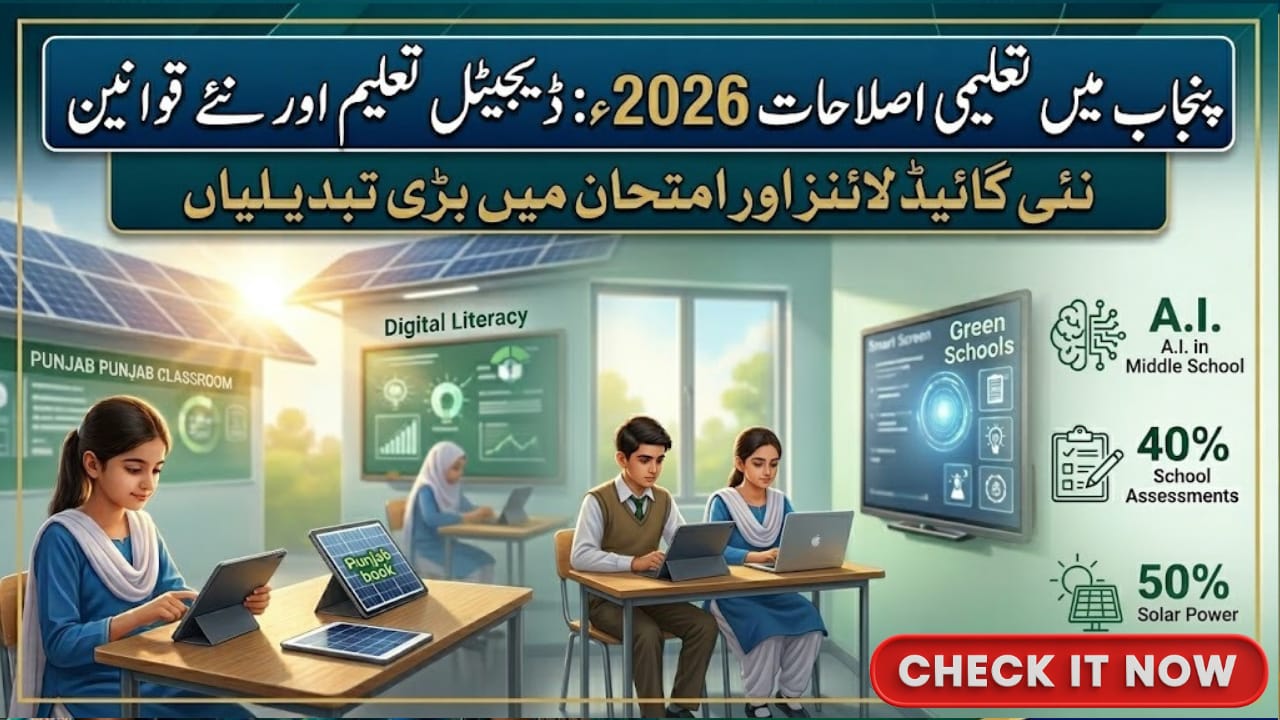
The Punjab School Education Department (SED) has announced major reforms for the 2026 academic session, aiming to modernize the education system across the province. These new guidelines focus on digital learning, improved school infrastructure, and better teaching standards. The reforms also introduce AI education, new assessment systems, and green energy policies for schools. With the new session approaching, parents, teachers, and administrators must understand these updates to ensure compliance and prepare students for a modern learning environment.

Table of Contents
Read Also: How To Download E-License from Punjab Traffic Police
| Reform Area | Details |
| Academic Session | Starts April 1 2026 |
| Digital Learning | AI and coding modules for Grade 6–8 |
| Assessment Model | 40 percent School Based Assessment |
| Health Measures | First aid rooms required in schools |
| Energy Policy | Solar power adoption encouraged |
| School Timings | Summer hours 7:30 AM to 1:00 PM |
| Teacher Training | Mandatory bi annual training |
| Monitoring System | SIS digital monitoring platform |
Overview of Punjab Education Reforms 2026
The Punjab Education Reforms 2026 aim to shift the education system from traditional rote learning to a skill based and technology driven approach. According to official announcements and information from education authorities and reliable sources, these reforms will help improve teaching quality and prepare students for modern careers.
The government plans to introduce digital learning tools, improve student well being, and strengthen teacher accountability across both public and private schools.
Key Highlights of the New School Guidelines
1. Digital Learning Focus: Schools must increase computer and technology based learning activities.
2. Modern Curriculum: AI and coding modules are introduced for middle school students.
3. Improved Assessment: Students will be evaluated through projects quizzes and school assessments.
4. Health and Safety Standards: Schools must provide basic medical and safety facilities.
These reforms aim to create a more balanced education system that focuses on creativity and skills.
Digital Transformation in Schools
The Punjab government is prioritizing digital literacy in classrooms. Schools are now required to allocate at least three hours per week for computer lab activities.
1. AI Education: AI foundations subject introduced for Grade 6 to Grade 8 students.
2. Smart Classrooms: Schools are encouraged to replace blackboards with smart boards.
3. Digital Labs: Computer labs will support coding and technology learning.
4. Online Learning Tools: Digital resources will be integrated into teaching.
This initiative will help students develop skills needed for the modern technology driven world.
Revamped Assessment and Grading System
The new reforms introduce a continuous assessment model instead of relying only on final exams.
- Monthly quizzes and assignments will contribute to student grades.
- School Based Assessment will account for 40 percent of the final score.
- The Punjab Examination Commission will provide standardized question banks.
- Special remedial programs will support students with learning gaps.
This approach ensures that students are evaluated on their overall learning progress rather than a single examination.
Green Schools and Climate Friendly Policies
Punjab schools are also required to adopt environmentally friendly practices.
1. Solar Energy Adoption: Schools must shift at least 50 percent of energy usage to solar power.
2. Smog Safety Measures: Masks and indoor activities during high pollution days.
3. Green Infrastructure: Tree plantation campaigns encouraged.
4. Energy Awareness: Students will learn about climate protection.
These steps aim to protect students from environmental hazards such as smog and heatwaves.
Teacher Training and Accountability
Teachers play a key role in implementing the new education reforms.
1. Mandatory Training: Teachers must attend regular training sessions.
2. Performance Monitoring: School Information System will track teacher performance.
3. Incentive Programs: High performing teachers may receive special allowances.
4. Digital Teaching Skills: Training will focus on modern teaching methods.
Improving teacher skills will help ensure better educational outcomes for students.
Helpline & Contact
For more information about the new school guidelines and reforms you can contact the Punjab School Education Department.
Official Website: https://schools.punjab.gov.pk
School Education Department Helpline: 042-99210801
Punjab Examination Commission Website: https://pec.edu.pk
Parents and school administrators can also contact their local education offices for guidance.
Conclusion
The Punjab Education Reforms 2026 represent a major step toward a modern education system. By introducing digital learning, continuous assessments, green school policies, and teacher training programs, the government aims to improve the quality of education across the province. These changes will help students develop critical thinking, technology skills, and environmental awareness needed for future success.
Frequently Asked Questions
When will the new academic session start in Punjab
The new academic session is expected to start on April 1 2026 after annual examinations.
Is AI education mandatory for students
Yes AI and digital literacy modules are mandatory for students in Grade 6 to Grade 8.
Are smartphones allowed in schools
Students are generally not allowed to use smartphones but tablets may be used for educational purposes in smart labs.
Will the new reforms apply to private schools
Yes both public and registered private schools in Punjab must follow the new guidelines issued by the School Education Department.
Latest Updates
 Breaking: 23000 Ramzan Package SMS Apply CNIC New Code 2026 – Full Step-by-Step Registration Guide
 Breaking: BISP 8171 Installment Reactivation 2026 – Complete CNIC Verification & Payment Restore Guide
 Breaking: 8171 BISP March 2026 New Survey & Installment – Complete Guide for Beneficiaries
 Breaking: How to Change Your Name on a NADRA ID Card (CNIC) Big Update 2026
 Breaking News: Khud Mukhtar Program Apply Online 2026 Today Update – Registration Guide for Punjab Youth
 Breaking News: AZAG Punjab Balloting Result 2026 – ACAG Application Status Check Guide