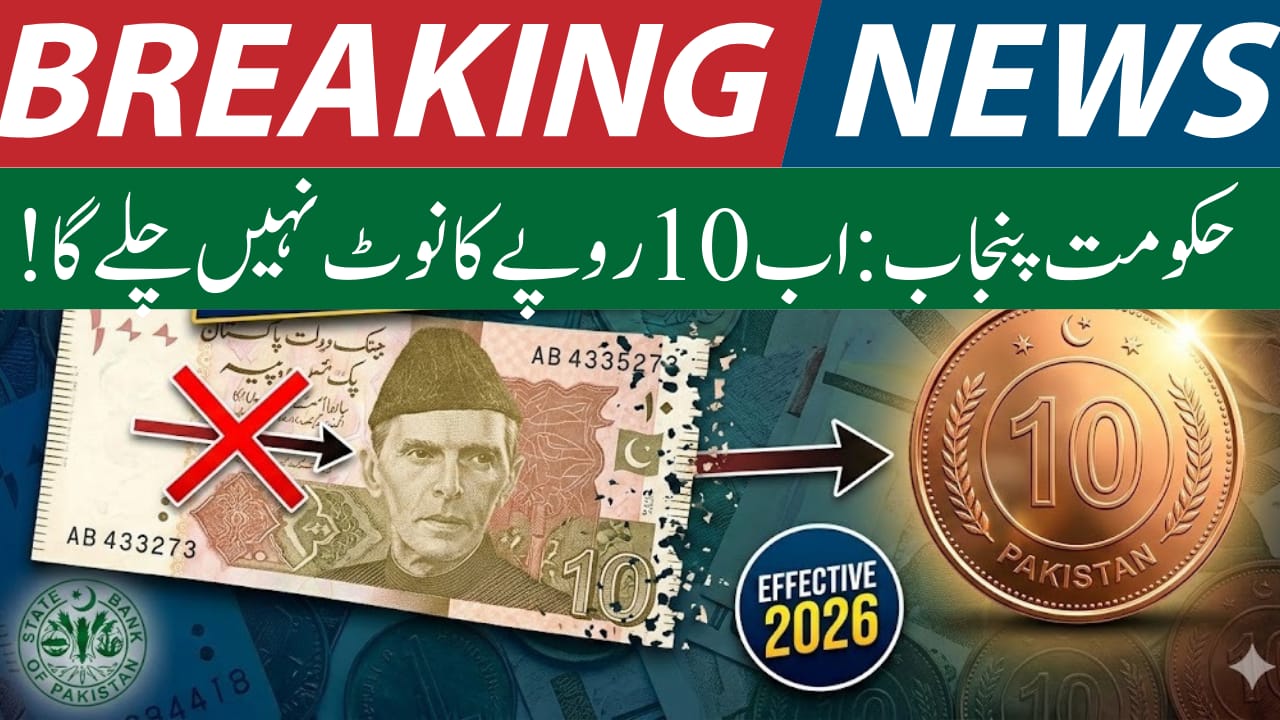
End of Rs. 10 Note
The Government of Pakistan has announced plans to phase out the Rs. 10 banknote and replace it permanently with a more durable Rs. 10 coin. This move aims to reduce printing costs, increase lifespan, and improve convenience for daily transactions. Unlike cotton-based paper notes that wear out in 1–2 years, the new coins are made from copper-nickel or brass alloys and are expected to last decades, offering a long-term, cost-effective currency solution.
Table of Contents
Read Also: Check Your Name in 9999 PM Ramzan Package Rs 13,000
Rs. 10 Banknote vs. Rs. 10 Coin
| Feature | Rs. 10 Banknote | Rs. 10 Coin |
| Denomination | Rs. 10 | Rs. 10 |
| Material | Cotton-based Paper | Copper-nickel / Brass Alloy |
| Average Lifespan | 1–2 Years | 25–30 Years |
| Maintenance Cost | High (Frequent Re-printing) | Low (One-time minting) |
| Recyclability | Difficult (Shredded/Burned) | Easy (Can be melted & reused) |
| Counterfeit Risk | Moderate | Low |
| Circulation Ease | Lightweight, Easy to Carry | Lightweight, Durable, Convenient |
| Official Portal | State Bank of Pakistan | Same |
Why the Rs. 10 Note is Being Phased Out
The Rs. 10 banknote has a short lifespan of 1–2 years, which increases printing and operational costs for the government. Frequent replacement also adds to environmental waste. Switching to a coin provides a long-term solution, with durability of up to 25–30 years, reducing overall costs and promoting financial sustainability.
Key Reasons for Replacement:
- Longevity and Durability – Coins last decades, unlike paper notes.
- Cost Efficiency – One-time minting reduces recurring printing expenses.
- Reduced Counterfeit Risk – Coins are harder to replicate than cotton-based notes.
- Recyclability – Coins can be melted and reused, minimizing waste.
Features of the Rs. 10 Coin
The Rs. 10 coin is designed to be durable, lightweight, and convenient for daily transactions.
- Material Composition – Made from copper-nickel or brass alloy.
- Enhanced Lifespan – Can remain in circulation for 25–30 years without significant wear.
- Cost Reduction – Eliminates frequent printing costs associated with paper notes.
- Improved Security – Low risk of counterfeiting due to metallic composition and advanced minting technology.
Impact on Daily Transactions
Transitioning to coins may require public adaptation, but the benefits are significant:
- Ease of Use – Coins are easy to handle, exchange, and store for small transactions.
- Lower Replacement Hassle – Reduces shortages caused by torn or damaged notes.
- Public Awareness – Campaigns will guide citizens on using coins effectively.
- Retail Adaptation – Shops and vending machines will gradually adapt to Rs. 10 coins.
Step-by-Step Introduction Process
- Minting coins at authorized facilities according to quality standards.
- Distribution to banks across Pakistan.
- Public awareness campaigns via TV, print, and social media.
- Gradual withdrawal of Rs. 10 banknotes.
- Continuous monitoring by the State Bank of Pakistan to ensure a smooth transition.
Helpline & Contact Information
For queries related to the Rs. 10 coin and banknote replacement:
- Official Portal: State Bank of Pakistan
- Customer Helpline: 021-111-727-111
- Local Bank Branches for exchanges and guidance
- Email Support: info@sbp.org.pk
Advantages of Permanent Coin Replacement
- Longevity – Coins last over 25 years compared to just 1–2 years for notes.
- Cost Savings – Government saves on frequent reprinting of worn-out notes.
- Environmental Benefits – Recyclable coins reduce paper waste and carbon footprint.
- Security – Metallic coins are more resistant to counterfeiting.
Conclusion
Replacing the Rs. 10 banknote with a durable coin is a long-term step toward financial sustainability in Pakistan. Coins offer longevity, lower maintenance costs, higher security, and environmental benefits. Citizens are advised to stay informed via the State Bank of Pakistan portal and gradually adapt to this change. The Rs. 10 coin is not just a replacement—it’s a smarter, cost-effective currency solution.
FAQ
Why is the Rs. 10 banknote being replaced?
Short lifespan, high printing costs, and moderate counterfeit risk make coins a better long-term solution.
How long will the Rs. 10 coin last?
The coin is expected to remain in circulation for 25–30 years.
Where can I exchange old Rs. 10 notes?
Authorized banks across Pakistan will facilitate exchanges during the transition period.
Is the Rs. 10 coin safer than notes?
Yes, coins are harder to counterfeit and more durable than paper notes.