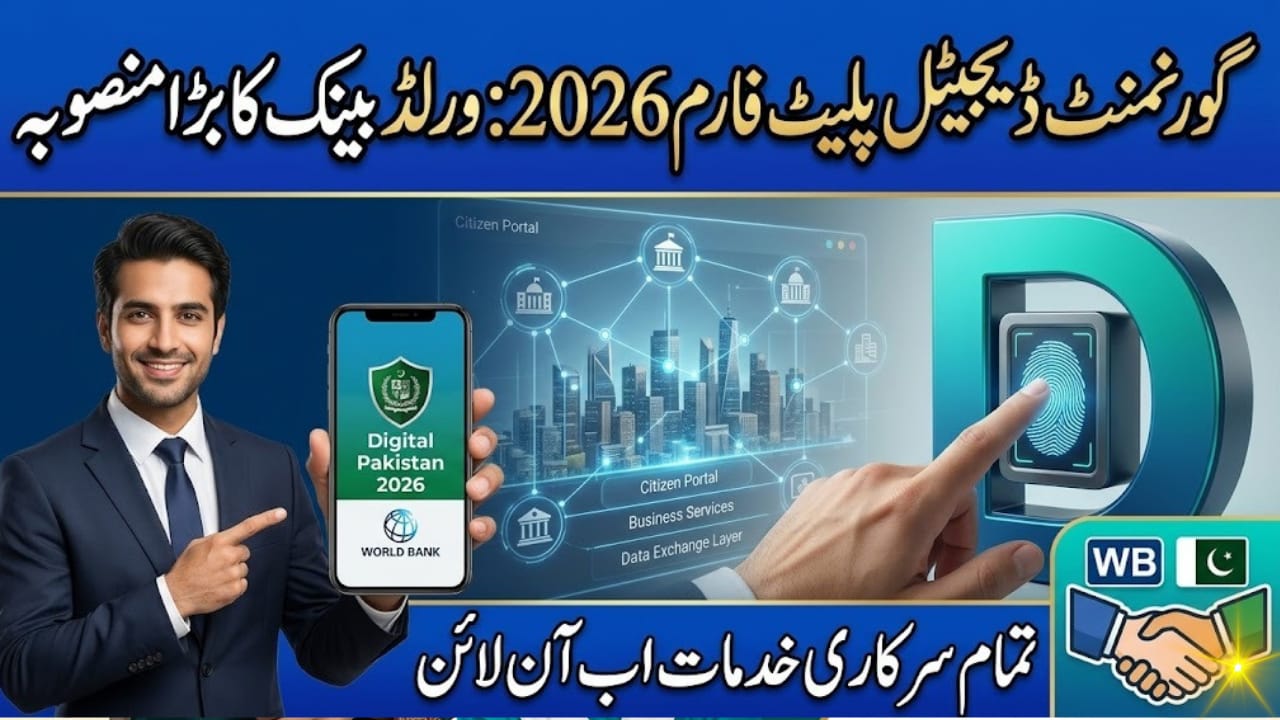

Govt Digital Platform 2026
Pakistan is moving toward a fully digital government system by 2026. The Govt Digital Platform, supported by the World Bank under the Digital Economy Enhancement Project (DEEP), aims to make public services faster, transparent, and accessible online. With a budget of about $78 million, this initiative will allow citizens and businesses to access government services through one digital gateway instead of visiting multiple offices. The project will reduce paperwork, simplify payments, and help Pakistan build a modern digital economy.

Table of Contents
Read Also: Sindh Announces Spring Holidays
| Feature | Govt Digital Platform 2026 |
| Project Name | Digital Economy Enhancement Project (DEEP) |
| Funding | World Bank |
| Estimated Budget | $78 Million |
| Lead Authority | Ministry of IT and Telecommunication |
| Main Portal | National Citizen Portal |
| Business Services | Pakistan Business Portal |
| Payment System | Digital payments via RAAST |
| Security | Government Cybersecurity Framework |
What Is the Govt Digital Platform 2026
The Govt Digital Platform 2026 is a nationwide digital infrastructure designed to connect government departments and offer services through a single online portal. Instead of visiting different offices for documents, citizens will apply for services online and receive digital approvals quickly.
The initiative is being implemented by the Ministry of IT with support from international partners. According to the official project documentation and information available from top Google sources, the platform will simplify public administration and make services accessible through mobile phones and web portals.
Key Components of the Digital Government Platform
Several systems will work together to create this unified digital ecosystem.
1. National Citizen Portal: A central app and website where citizens can access multiple government services from one dashboard.
2. Pakistan Business Portal: A dedicated platform for entrepreneurs to register businesses and apply for licenses.
3. Data Exchange Layer: A secure system allowing government departments to share verified data automatically.
4. Digital Payment Gateway: Integration with banking systems for fast online payments.
These components aim to eliminate repetitive paperwork and reduce delays in service delivery.
Benefits for Citizens and Businesses
The digital platform is designed to improve efficiency and transparency.
1. Faster services: Applications that previously took weeks will be processed online within days.
2. Reduced corruption: Digital workflows reduce unnecessary human interaction.
3. Easy tracking: Citizens can track applications through SMS alerts and online dashboards.
4. Business growth: Entrepreneurs can register companies and obtain licenses without visiting multiple offices.
This system will help citizens save time and businesses operate more efficiently.
Strategic Goals of the Project by 2026
The government has set several milestones for the digital transformation.
1. Cashless government payments: Salaries, pensions, and welfare payments will move to digital systems.
2. Integration with RAAST: Instant digital payments supported by the State Bank of Pakistan.
3. Online documentation: Digital issuance of certificates and permits.
4. National data connectivity: Secure sharing of records among departments.
These goals will strengthen Pakistan’s digital economy and improve public services.
How Citizens Can Prepare for Digital Services
Citizens can prepare for this digital transition by following these simple steps:
- Ensure your mobile number is registered with your CNIC.
- Keep your identity information updated with NADRA.
- Create an account on the National Citizen Portal.
- Learn to use digital payment systems like bank apps or wallets.
- Use official government portals for applications.
One official government portal that provides related information about digital services and governance is https://www.moitt.gov.pk which belongs to the Ministry of IT and Telecommunication.
Cybersecurity and Data Protection Measures
As digital systems expand, cybersecurity becomes critical. The government plans to introduce stronger protection measures.
1. Cyber Security Authority: A national body responsible for protecting government systems.
2. Secure data exchange: Government departments will share encrypted information.
3. Monitoring systems: Continuous monitoring to detect cyber threats.
4. Citizen data protection: Strict policies to prevent misuse of personal information.
These safeguards will help ensure that digital services remain safe and reliable.
Helpline & Contact
Citizens who need help with digital government services can contact official authorities.
- Ministry of IT and Telecommunication Helpline: +92 51 9201865
- National Citizen Portal Support: Available through the mobile app help section
- Pakistan Citizen Portal Complaint System: Accessible through mobile application
- NADRA Helpline: 1777 (within Pakistan)
These channels can assist users with account setup, service access, and technical issues.
Conclusion
The Govt Digital Platform 2026 is a major step toward modern governance in Pakistan. By connecting multiple government departments through a unified digital system, the initiative will make services faster, more transparent, and easier to access. Citizens will benefit from online applications, digital payments, and real-time tracking of services. Supported by the World Bank and implemented by the Ministry of IT, this project is expected to transform Pakistan into a more efficient and citizen-friendly digital nation.
FAQ
What is the Govt Digital Platform 2026?
It is a nationwide digital system that will allow citizens to access government services online through a single portal.
Who is funding the Digital Economy Enhancement Project?
The project is funded by the World Bank with support from the Government of Pakistan.
What services will be available on the platform?
Services will include business registration, government certificates, payments, and citizen complaint systems.
How will digital payments work in the new system?
Government payments will be processed through digital systems such as bank transfers and the RAAST instant payment network.

Latest Updates
 Breaking: 8171 Fresh March Update 2026 – Check Rs.13,500 Payment via BISP Portal
 Breaking: BISP 8171 Eid Payment 14500 Start Today – Check Online & Latest Update 2026
 Breaking News: Petrol Diesel Prices in Pakistan May Rise Before Next Update – New Petrol Price Forecast 2026
 Breaking: NADRA CNIC Smart Card Check New Features March 2026 – Complete Step-by-Step Guide
 Breaking News: Livestock Card Third Installment 2026 Released – Check Eligibility & Payment Method Now
 Breaking: BOP Announced ATM Cardfor BISP 2026 Payment (Step-by-Step Guide)