
Petrol Price Increase in Pakistan
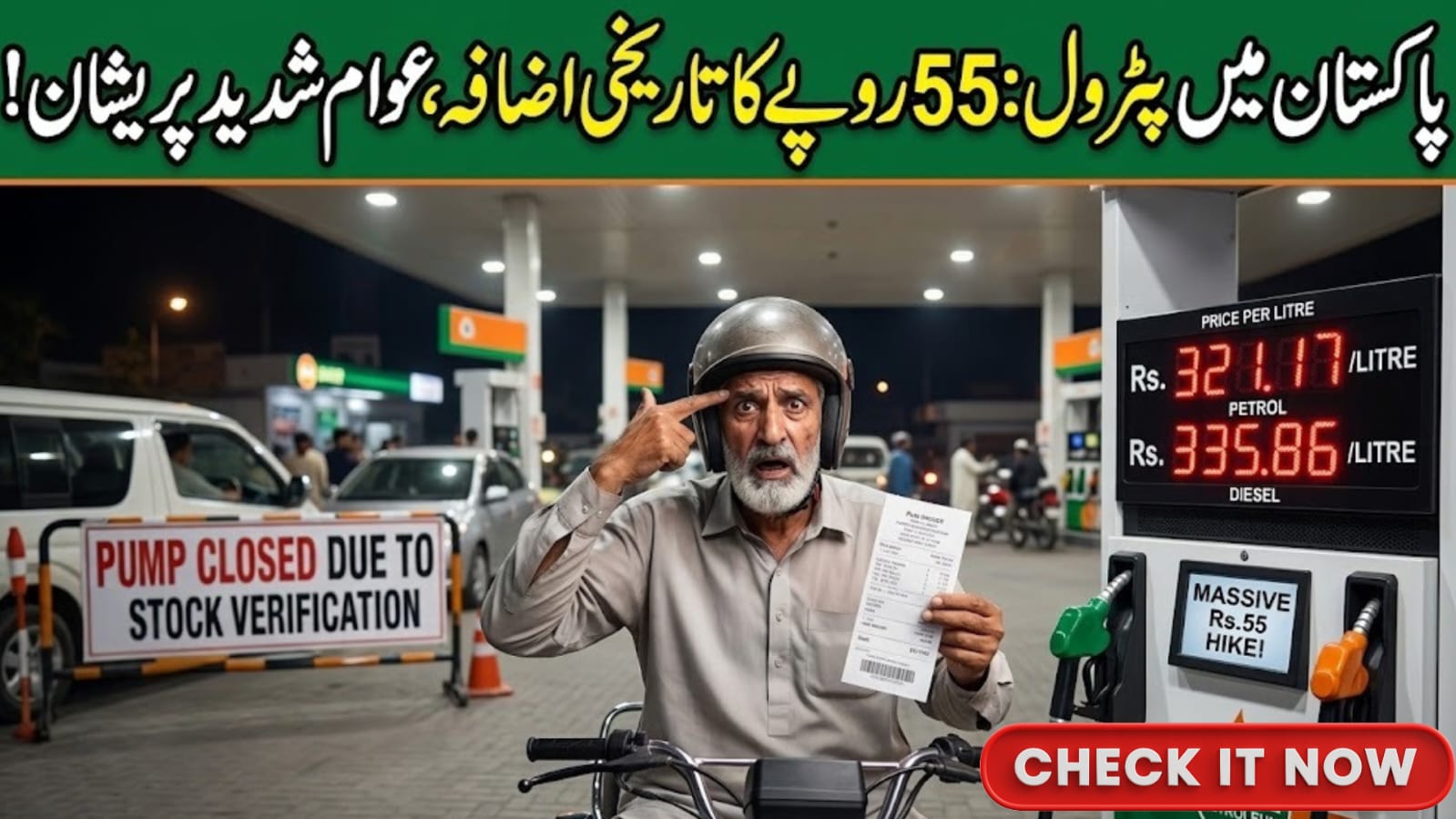
The latest Petrol Price Increase in Pakistan has shocked millions of drivers and commuters across the country. Starting March 7, 2026, the government announced a major rise of Rs. 55 per litre for petrol and high-speed diesel. Officials say the decision was necessary due to rising global oil prices and economic pressures. However, this increase is expected to impact transport costs, food prices, and daily living expenses for many households in Pakistan.

Table of Contents
Read Also: CM Punjab Mazdoor Card
| Key Information | Details |
|---|---|
| Announcement Date | March 7, 2026 |
| Petrol Price Increase | Rs. 55 per litre |
| Diesel Price Increase | Rs. 55 per litre |
| New Petrol Price | Rs. 321.17 per litre |
| New Diesel Price | Rs. 335.86 per litre |
| Previous Petrol Price | Rs. 266.17 per litre |
| Price Review Policy | Weekly review |
| Official Information | https://www.finance.gov.pk |
New Petrol and Diesel Prices in Pakistan
The government confirmed the new fuel rates after a late-night meeting led by Muhammad Aurangzeb and Ali Pervaiz Malik.
• Petrol price change:
Petrol increased from Rs. 266.17 to Rs. 321.17 per litre, marking a historic jump.
• High-Speed Diesel increase:
Diesel rose from Rs. 280.86 to Rs. 335.86 per litre.
• Regional price variation:
Some remote areas may see slightly higher prices due to transportation costs.
• Policy shift:
Fuel prices will now be reviewed weekly to match international oil trends.
Why the Petrol Price Increase Happened
Officials say the sudden Petrol Price Increase was caused by several global and economic factors.
• Global oil market surge:
Crude oil prices climbed above $100 per barrel due to geopolitical tensions.
• Strait of Hormuz tensions:
Instability near the Strait of Hormuz has disrupted global oil supply.
• Import dependency:
Pakistan relies heavily on imported oil, making domestic prices sensitive to international markets.
• Currency pressure:
A weaker rupee increases the cost of petroleum imports.
IMF Policy and Government Decisions
Pakistan’s economic agreements also played a role in the recent price hike.
• IMF full pass-through policy:
The International Monetary Fund requires Pakistan to pass global price changes to consumers.
• Reduced subsidies:
The government cannot provide large fuel subsidies under IMF conditions.
• Fiscal stability goal:
Maintaining loan agreements is necessary for Pakistan’s economic stability.
• Budget pressure:
Fuel subsidies can create large financial deficits if maintained for long periods.
Step-by-Step Timeline of the Petrol Price Announcement
- Global oil prices surged above $100 per barrel.
- Pakistani authorities reviewed international market data.
- Finance and petroleum ministries held a late-night meeting.
- The government approved a Rs. 55 per litre increase.
- The official announcement was made on March 7, 2026.
- New prices became effective nationwide immediately.
Impact on Commuters and the Economy
The Petrol Price Increase is expected to affect many sectors in Pakistan.
• Transport costs rising:
Bus fares, ride-hailing services, and freight charges may increase by 15–20%.
• Food price pressure:
Higher transport costs could raise prices of vegetables, flour, and milk.
• Electricity bills:
Fuel-based power generation may cause higher fuel price adjustments.
• Business operating costs:
Industries dependent on transportation could face higher expenses.
Tips to Manage Higher Fuel Costs
Drivers can reduce fuel spending by following a few practical steps.
• Carpool with colleagues:
Sharing rides can significantly reduce daily fuel expenses.
• Maintain your vehicle:
Regular engine tuning and correct tire pressure improve mileage.
• Avoid unnecessary trips:
Combine errands to reduce driving frequency.
• Reduce engine idling:
Switch off your vehicle during long traffic stops.
Helpline & Contact Information
For official updates on petroleum prices, you can contact government sources.
- Ministry of Finance Pakistan: +92-51-9202387
- Petroleum Division: Islamabad
- Official Website: https://www.finance.gov.pk
- Consumer Information Portal: Government fuel price announcements
Conclusion
The sudden Petrol Price Increase of Rs. 55 per litre in Pakistan has created major concern among citizens and businesses. While the government says global oil prices and IMF conditions forced the decision, the impact will likely be felt through higher transport fares, food costs, and overall inflation. Drivers and households may need to adopt fuel-saving habits and budget adjustments to cope with these rising expenses.
Frequently Asked Questions
Why did petrol prices increase in Pakistan in 2026?
Prices increased mainly due to global oil price surges, geopolitical tensions, and IMF policy requirements.
What is the new petrol price in Pakistan?
The new petrol price is approximately Rs. 321.17 per litre after the Rs. 55 increase.
Will petrol prices change again soon?
Yes. The government has announced weekly fuel price reviews based on global market trends.
How will the petrol price increase affect daily life?
It may increase transport fares, food prices, electricity bills, and overall inflation in the country.
Latest Updates
 Breaking: 8171 Fresh March Update 2026 – Check Rs.13,500 Payment via BISP Portal
 Breaking: BISP 8171 Eid Payment 14500 Start Today – Check Online & Latest Update 2026
 Breaking News: Petrol Diesel Prices in Pakistan May Rise Before Next Update – New Petrol Price Forecast 2026
 Breaking: NADRA CNIC Smart Card Check New Features March 2026 – Complete Step-by-Step Guide
 Breaking News: Livestock Card Third Installment 2026 Released – Check Eligibility & Payment Method Now
 Breaking: BOP Announced ATM Cardfor BISP 2026 Payment (Step-by-Step Guide)